

Instagram for B2B Marketing: 10 Strategies That Actually Work in 2026


Vacation photos, themed restaurants, celebrities, trends, pets. Instagram feels like a lifestyle portfolio.
Everything about this platform feels B2C. And yes, it has always been a natural playground for consumer brands.
That’s why many conservative B2B companies still say, “Instagram is all cats and coffee. Our customers are not there.”
But that assumption misses one key fact. 47% of adult Americans use Instagram. That includes decision-makers from your target companies.
The same visual nature and storytelling power are exactly what make Instagram effective for B2B today.
This is not speculation. Business Dasher research shows Instagram can generate up to 20 times higher engagement than LinkedIn in specific contexts.
Leading B2B brands already understand this change. The question is no longer whether Instagram works. It’s about learning how it works.
In this guide, you’ll learn 10 practical strategies to use Instagram for B2B marketing in the right way.
10 Practical Strategies to Use Instagram for B2B Marketing
Instagram B2B marketing walks a thin line between casual and formal. Too casual, you’ll be scrolled past. Too formal, you’ll still be scrolled past.
That’s why success on Instagram is not about forcing B2B messaging into a polished frame. It’s about presenting your value in a way that feels native to how people already use the platform.
It may feel like a lot at first. But below you’ll find 10 B2B Instagram marketing strategies that put your brand on the radar of your prospects subtly yet strongly.
TL;DR
1. Set clear goals tied to your sales funnel
Decide what Instagram is supposed to do for your business right now. Awareness, consideration, or qualified actions. One goal at a time, measured properly.
2. Turn your Instagram profile into a lead magnet
Your profile should guide visitors into your sales funnel, not just look good. A clear bio, strong CTA, highlights, and easy contact options make the difference.
3. Follow a 70/20/10 content mix
The best B2B Instagram accounts don’t sell all the time. They balance education, human content, and promotion to stay relevant without sounding forced.
4. Use Reels to share expertise and insights
Reels help you reach new audiences and explain ideas fast. Objection-led, searchable, save-worthy Reels consistently outperform generic tips in B2B.
5. Use carousels for educational content
Carousels work well for frameworks, breakdowns, and step-by-step insights. They drive higher engagement and saves, which matters more than likes.
6. Collaborate with niche influencers and experts
Influencers help B2B brands borrow trust faster. Long-term, insight-driven collaborations work better than one-off promotions.
7. Run targeted ads for leads and retargeting
Ads work best when they amplify what’s already proven organically. Narrow targeting, small budgets, and consistent testing keep costs under control.
8. Engage actively to build trust and community
Trust is built in conversations, not posts. Consistent replies, open discussions, and calm handling of feedback strengthen long-term relationships.
9. Repurpose high-performing content
If content performs well once, it deserves more reach. Repurposing saves time and helps your best ideas work harder across channels.
10. Track results and refine with data
Data tells you what to keep, what to fix, and what to stop. Regular reviews help you grow with intention instead of guessing.
Let’s learn about the strategies in detail now.
1. Define clear, measurable goals aligned with your sales funnel
To utilize Instagram for B2B marketing successfully, you need to set clear goals first. Your business already has a plan, an established sales funnel, and a set of metrics to measure growth.
Now, Instagram needs to fit into that funnel. It should support your sales process or at least strengthen one pipeline stage. Otherwise, it will only drain time, energy, and resources.
Before you post anything, decide what Instagram is supposed to do for you right now:
- Build awareness at the top of the funnel. Show up in front of the right people. Educational Reels, industry takes, and problem-focused posts that introduce your brand without selling.
- Nurture interest through saves, comments, and profile visits. Help prospects understand how you think. Carousels, breakdowns, and “why this matters” content that people want to save.
- Drive qualified actions like demo requests or business inquiries. Give interested users a clear next step. Profile CTAs, link-in-bio pages, or DMs that move conversations forward.
Pick one primary goal, not all three. Then make it measurable:
- Awareness: Track reach and impressions to understand visibility, not popularity.
- Consideration: Look at saves, comments, and profile clicks. These show user intents.
- Decision: Measure link clicks, form submissions, or conversations started in DMs.
This Instagram B2B marketing strategy worked so well for our brand. We focused on driving qualified traffic to our website. As a result, we saw a 48% increase in traffic from Instagram and a 79% growth in click-throughs to our landing pages over the past year.
2. Optimize your Instagram profile as a lead magnet
Your Instagram profile is often the first touchpoint for a potential buyer. So it needs to be more than visually appealing. It should guide visitors directly into your sales funnel.
Here’s how to optimize your Instagram Business profile so it works as a lead magnet:
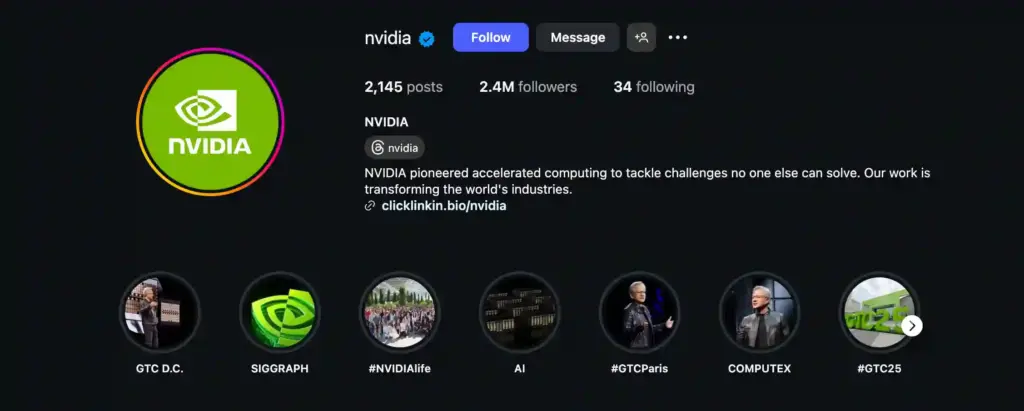
- Switch to a Business profile first. Go to Settings > Account type and tools > Switch to professional account > Business. And you’ll get access to insights, ads, Instagram Shops, CTA buttons, and other amazing built-in and useful features.
- Write a clear bio within 150 characters. State what you do clearly. Add relevant industry keywords and a simple CTA like “Book a Call” or “Request a Demo”.
- Use Story Highlights to showcase your business. Create categories like “Tips,” “Demos,” or “Clients.” They will work as your business portfolio for a new prospect.
- Use a high-quality logo and add clear contact options. Set your company logo as the profile picture. Add contact details like email or WhatsApp to make it easy for prospects to reach you.
For reference, you can look at NVIDIA’s Instagram profile. They use a clear logo, a focused bio with a link hub, and Story Highlights to present their business at a glance.
3. Build a structured content calendar using a 70/20/10 mix
The 70/20/10 content mix helps B2B brands stay active on Instagram, following the natural vibe of the platform. When we looked at some of the best B2B Instagram accounts, we noticed a pattern. They don’t post sales content all the time.
About 70% of their posts are educational or industry-focused. 20% are more human, like behind-the-scenes or highlighting client testimonials, use cases, and success stories. Only 10% are promotional. This balance helps brands stay visible on Instagram without feeling forced or overly formal.
You can see this clearly on Adobe’s Instagram. They don’t post product promotions all the time.
Most of their content talks about AI, career changes, and skill growth. Product features show up inside those conversations. Promotions are there, but inside the story they tell. That’s why the content feels natural and engaging, not forced.
That’s why the content feels natural and engaging, not forced.
Pro Tips: Discover the best Instagram content ideas for businesses based on real case studies.
4. Use Reels to deliver expertise and industry insights
Reels accounts for over 60% of the time spent on Instagram, and are reshared more than 4.5 billion times every day. That makes it one of the most effective formats for sharing expertise, reaching new audiences, and staying visible without sounding promotional.
Follow these tips to leverage Reels creatively for B2B marketing on Instagram from our personal experience:
- Start Reels with real objections from your niche. For example, begin with something buyers actually say, like “Most CFOs think AI tools are too expensive for mid-market teams.” Then, break this misconception with one insight or data point in the first 10–15 seconds. Then hint at the deeper solution. We’ve seen that these objection-based Reels drive 3x or 4x more qualified inquiries than generic tips.
- Use quiet, low-usage audio with your own voice. Look for subtle audio with under 20k uses. Keep it barely audible at 5% to 15% volume and let your voice lead. This helps Reels reach non-followers without sounding trendy or salesy.
- Write Reels captions like people will search for them later. Start captions with clear phrases like “B2B cart abandonment recovery strategy for 2026.” Add simple text on the cover and select relevant Topics when posting. Reels now rank on Instagram like blog posts. They can often keep bringing traffic months later with properly optimized captions.
- Show part of the framework, not the full answer. Explain just enough to show you know the problem and have a system. In the last 3–5 seconds, ask viewers to save the Reel and leave the full breakdown for DMs or follow-ups. For instance, “To get access to all my Notion templates, comments Templates, OR DM me directly.”
These B2B Instagram strategies are proven. We have followed them for our brands. And we noticed that Reels are bringing 4 or 5 times more views and engagement than static images.
5. Leverage carousels for deeper, educational content
Carousels help B2B brands explain ideas in a structured way. That’s why they work well for educational content like frameworks, breakdowns, or step-by-step insights.
This format actually keeps people engaged for longer. Carousels see 12% more engagement than Reels, 114% more engagement than static images, and deliver the highest save rate on Instagram.
We particularly like how Semrush, a popular SEO research and digital marketing tool provider, uses carousels. They’ve been using this format for more engagement, reactions, and shares. And slowly building authority around their expertise at the same time.
Here’s how Semrush uses carousel for instagram b2b marketing strategy:
- Share industry trends and insights using simple infographics
- Make light or funny content relatable to industry professionals
- Create practical tips and tricks for marketers
- Break down common marketing problems and show solutions using their product
You can follow the same approach for your B2B marketing strategy as well. Also, you can explore our detailed guidelines on B2B social media content ideas for further reference.
6. Partner with niche influencers and industry thought leaders
According to Sprout Social Research, 49% consumers purchase at least once a month because of an influencer. This is no hoax. Influencers and thought leaders today play the same role celebrities did in old-age marketing.
For B2B brands, influencer partnerships help build trust faster. A new prospect may ignore what you say about your product, but they will pay attention when a trusted voice in their industry talks about it.
Here is how to use Instagram for B2B marketing with influencer collaboration:
- Use influencers to address real buyer doubts early. Instead of asking them to promote your product, involve them in testing features or ideas. Let them talk about common objections in short Reels. We’ve seen this bring 3 or 4 times more qualified inquiries than generic tip-style content.
- Go with a long-term agreement with influencers. Involve them in Story Q&As, Lives, or a dedicated Highlight where they answer questions over time. This works better for B2B, where buying decisions take longer and trust builds slowly.
- Choose partnerships based on audience feedback. Focus on insights like poll results or repeated questions, then create content around them. This approach has led us to 4 times higher savings and DM inquiries because the content feels more relevant.
- Host small influencer discussions and reuse the best parts. Run private sessions with 3 or 5 niche experts, record them, and turn the key moments into Reels or Carousels. This helps reach senior buyers and positions your brand as part of the conversation.
You can see this approach in action with Intel. The company regularly collaborates with respected tech experts to talk about new products and their potential use cases. They also host small roundtable discussions with influencers to explore industry challenges, instead of pushing direct promotions.
7. Run hyper-targeted ads to support lead generation and retargeting
The Instagram B2B marketing strategies we’ve discussed so far are mostly organic. Although trust grows naturally, you can fast-forward the process with targeted ad campaigns.
Here are some hyper-targeted ad strategies for B2B Instagram marketing from our professional experience:
- Start with narrow and specific audiences. Define them by job roles, industries, or known interests. Broad targeting usually burns budget without quality leads.
- Use short Reel-style ads first. Image ads get ignored quickly. Meanwhile, Reels explaining one problem or insight always work better. Test different hooks before increasing your spending.
- Begin with a controlled budget and a clear objective. Start around $50 per day and focus on lead forms or traffic to a focused landing page. The goal early on is learning, not volume.
- Retarget people who already showed intent. Use retargeting for profile visitors, video viewers, or website traffic through Meta Pixel. These audiences convert better and usually bring a lower cost per lead.
- Review performance weekly and rotate creatives. Pause ads that underperform, refresh visuals, and avoid running the same creative for too long. Ad fatigue sets in fast on Instagram, especially in B2B.

Get exclusive social media marketing tips and tutorials in your inbox!
8. Engage proactively to nurture relationships and community trust
The future of social commerce leans heavily on community building. Instagram for B2B marketing is no exception as well. Your community of loyal users is your biggest advocate, and new users always trust the recommendations from the old users most.
Here are some tips that we follow to nurture relationships and community trust:
- Pay attention to conversations every day. Check comments, mentions, and DMs regularly. When people talk to your brand and hear nothing back, trust breaks quietly.
- Reply like a human, not a brand. Respond within a day when possible. Use names. Answer questions properly. Generic replies don’t help anyone.
- Start conversations instead of waiting for engagement. Use Story polls, Q&As, or simple caption questions. Asking is often more effective than telling.
- Don’t avoid negative comments. Address them calmly and openly. In many cases, how you respond matters more than the problem itself.
Negative reviews are scary. But they are not necessarily bad. Explore why negative reviews are good for your business, actually.
9. Repurpose high-performing content across platforms and formats
Your high-performing content is proof of what works best for your audience. That’s why you should use it across multiple channels for better reach. It also saves time by reducing the need to create new content every day.
Follow these tips to repurpose your content as an effective B2B Instagram marketing strategy:
- Start with content that already performs well. Look at posts with higher saves and shares, not just likes. These signals tell you which ideas people actually find useful and worth revisiting.
- Change the format, not the idea. A blog post can become a carousel. A webinar clip can turn into a Reel. The message stays the same, only the delivery changes.
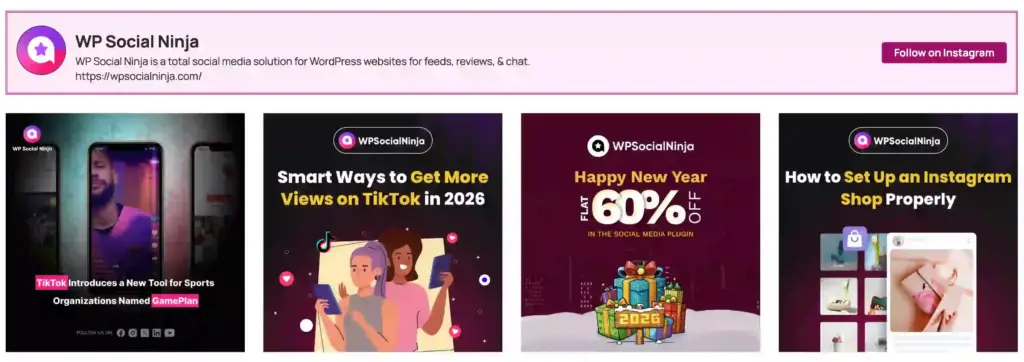
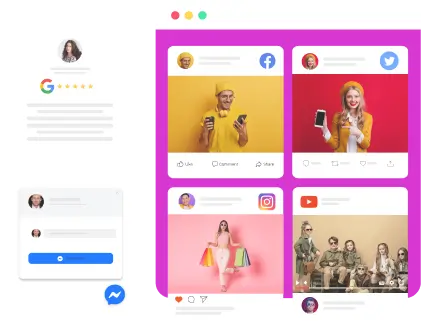
- Reuse content across platforms with context. Use tools like WP Social Ninja to embed your Instagram content on your website. This will help you attract new followers from your site and vice versa.
- Track what works after repurposing. Use simple tracking like UTM links to see which versions perform better. This helps you understand where your content has the most impact.
Win your customers’ hearts with exceptional features
Discover how WP Social Ninja can assist you in designing outstanding customer experiences.
10. Track performance and refine your strategy using data insights
Data is the key to surviving as a business in 2026. Without understanding the data, you’ll never know whether your existing strategies are helping you grow or draining your time and resources. Data-driven decisions help you move in the right direction over the long term.
Here’s how we track our performance and use data insights as a B2B brand:
- Review performance weekly. Look at reach, engagement, and saves to understand how your content is performing.
- Compare content types, not individual posts. Analyze how Reels, carousels, or Stories perform overall instead of judging one post.
- Test small changes over time. Try different posting times or formats and track what improves consistently.
- Measure business impact, not vanity metrics. Focus on traffic, leads, or conversations started rather than likes alone.
If you have just started, follow our detailed guidelines to figure out the best time to post on Instagram.
Get, set, sell with the right strategies
Instagram for B2B marketing holds strong potential for brands. All you need to do is follow the right strategies. And by now, you already know what those are.
So far, we’ve walked you through the 10 most effective strategies for B2B brands. These are not assumptions. They’re insights learnt from research and close observation of how B2B brands are winning on Instagram.
You now know how to set clear goals and build sustainable, long-term relationships with potential customers. All that’s left is to apply these strategies and see how they fit into your growth cycle.

Subscribe To Get
Weekly Email Newsletter
Connect, Customize, and Display Social Feeds, Reviews, and Chat widgets








Leave a Reply