

10 Plumbing Marketing Strategies That Actually Work in 2026


Most plumbing businesses are not bad at plumbing. They are invisible to the customers searching for them.
You can be the best plumber in your city. You can show up on time, fix what nobody else could fix, and leave the job site cleaner than you found it. None of that matters if the homeowner with a flooded basement cannot find your number or any way to contact you.
That is the real problem. And it is fixable.
I have spent years working with home service businesses. The plumbers who grow are not the ones charging the least or providing the best service. They are the ones running the right marketing for plumbers and sticking with it.
In this article, you’ll find 10 plumbing marketing strategies that move the needle in 2026. So, let’s get started.
Key takeaways
- Long-term growth comes from steady systems like referral programs, monthly maintenance plans, short videos, local Facebook groups, and partnerships with real estate agents and property managers.
- Plumbing marketing matters because even the best plumbers lose jobs when local homeowners cannot find them online or do not trust them at first glance.
- A fully set up Google Business Profile helps plumbers rank higher in local searches and Google Maps. Weekly posts, fresh job photos, and quick review replies keep your visibility high.
- Separate landing pages for every city you serve help you rank for searches like “plumber Dallas” and prove to homeowners that you actually work in their area.
- Google Local Services Ads outperform regular PPC ads because plumbers pay per lead and earn the green Google Guarantee badge that builds instant trust.
- Collecting and displaying customer reviews on your website builds trust fast. Tools like WP Social Ninja can pull your Google reviews onto your site automatically.
Top 10 plumbing marketing strategies you must try
These 10 plumbing marketing strategies cover everything a plumbing business needs to win local searches, capture emergency leads, build trust before the call, and keep customers coming back.
Each one works on its own. Together, they build the kind of marketing engine that runs even when you are on a job site.
1. Set up your Google Business Profile properly
A properly set up Google Business Profile (GBP) helps you rank in the local map pack, show up in “plumber near me” searches, and earn a citation in Google’s AI Overview. It is also free. No other marketing channel gives you that much visibility for zero spend.
Most plumbers claim it and stop there. That is a mistake. A half-finished profile ranks below a fully completed one, even if the half-finished one belongs to a better plumber.
Start with the basics. Fill in every field properly:
- Set “Plumber” as your primary category
- Add secondary categories like “Drain cleaning service” and “Water heater installation” so you appear in those searches too
- Define your service area accurately (the towns and ZIP codes you actually cover)
- Update your hours, including holiday hours
- Add a real phone number that someone actually answers
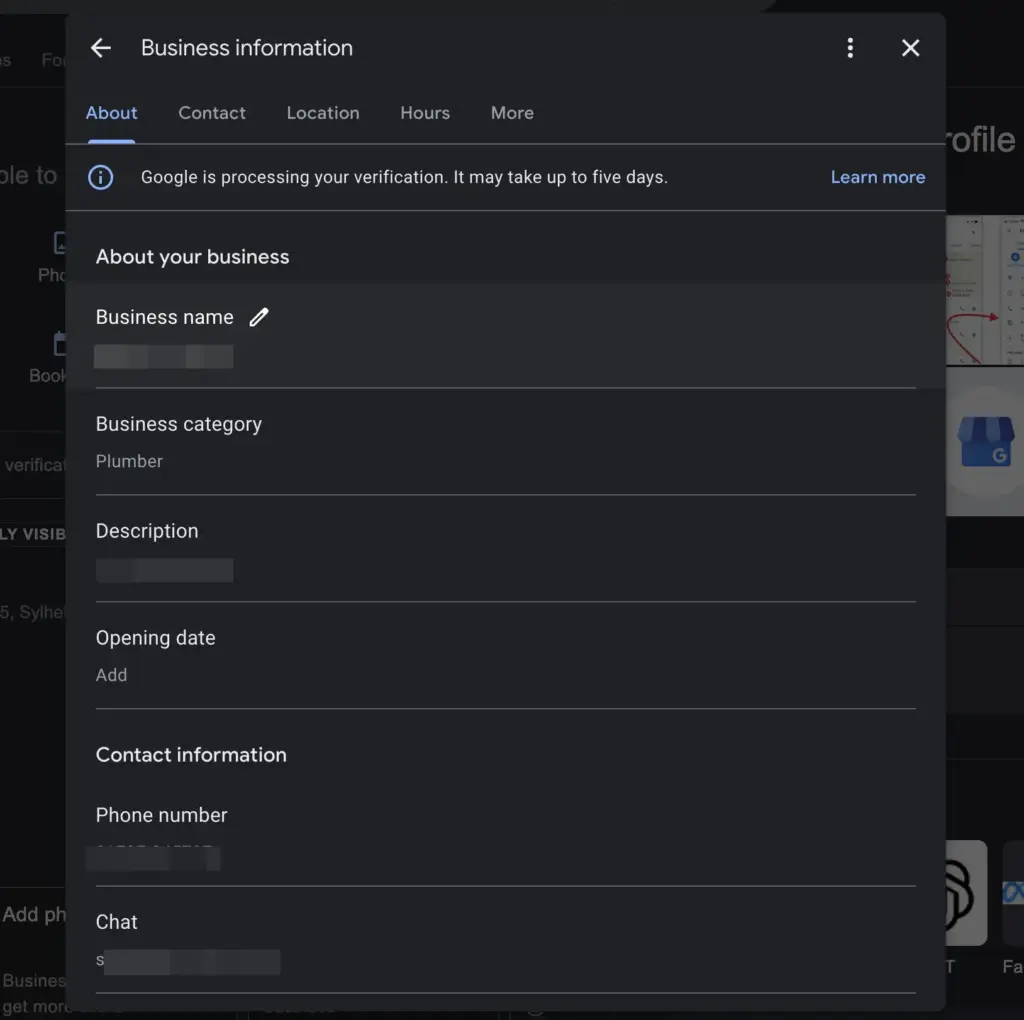
A complete profile is the foundation of any plumbing marketing strategy that targets local customers. The plumbers who win do more than that. They keep the profile alive.
Here is what “alive” looks like:
- Post a Google Post once a week (a seasonal tip, a finished job, a current offer)
- Upload 2 photos at every job, one before and one after. That is free GBP fuel forever
- Turn on messaging so customers can text you straight from the listing
- Respond to every review within 24 hours, good or bad
- Use the Q&A section to answer the questions you get on the phone every week
According to a recent local consumer survey, 83 percent of consumers used Google to evaluate local businesses last year. If your profile looks abandoned, you are out of the running before the call ever happens.
Pro Tips: Read our step-by-step guide on setting up your Google Business Profile the right way and getting the most out of it.
2. Make a separate page for every city you serve
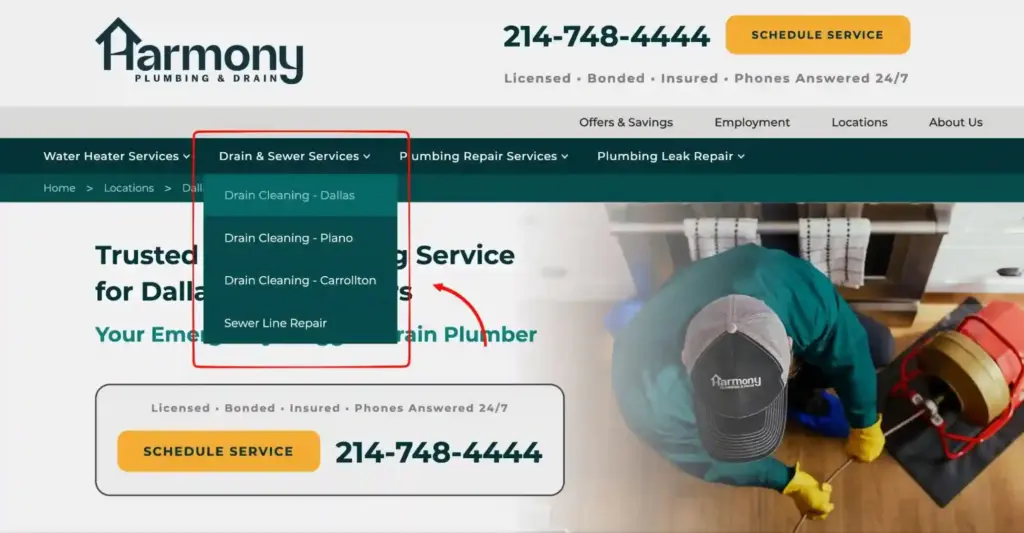
City-specific service pages help you rank for “plumber [city name]” searches in every town you cover. They also show homeowners that you actually work in their neighborhood, which makes them more likely to call.
Most plumbing websites have one “Service Areas” page that lists multiple towns in a single paragraph. That page does not rank for any of them. Google needs a dedicated page for each city to rank you for that city. If you serve 8 towns, you need 8 pages.
Each page should include:
- The city name in the URL, page title, H1, and meta description
- Local landmarks, older neighborhoods, and new developments you have worked in
- Common plumbing issues for that area (cast iron pipes in older homes, PEX issues in new builds)
- ZIP codes you cover within that city
- An embedded Google Map showing your service radius
- 2 or 3 customer reviews from that specific city, if you have them
A homeowner in Dallas searching “plumber Dallas” wants to see a page that says Dallas, not a generic page that says “we serve the greater metro area.” The plumber whose page mentions their actual street and neighborhood gets the call.
Bonus Tips: If you don’t have a website yet and are worried that building a new one will cost you a fortune, you can read our guide on how to create a website for free.
3. Run Google Local Services Ads to get the green badge
Google Local Services Ads (LSAs) put your plumbing business at the very top of the search results, above the regular ads and above the map pack. It is a popular form of plumber advertising that also comes with the green Google Guarantee badge, which homeowners trust the most.
Why LSAs are different from regular Google ads:
- You pay per lead, not per click. No more wasted spend on people who clicked but never called.
- The green Google Guarantee badge appears on your ad once Google verifies your license and runs a background check.
- The badge tells homeowners that the Google Verified program covers them and will refund up to a set amount if the work is bad.
- Most customers trust that badge more than a 4.9-star review. It is the difference between “this plumber sounds good” and “this plumber is safe to let into my house”.
A few things to get right when you set up LSAs:
- Keep your response rate above 90 percent. If it slips, your rank drops fast.
- Dispute irrelevant leads inside the dashboard. You should not pay for spam or wrong-number calls.
- Add real photos of your team and trucks. Stock images hurt your click rate.
- Turn on the messaging option so homeowners can text you straight from the ad.
Regular Google Search Ads (PPC) are a backup option for plumbers with bigger budgets, but LSAs must come first. They cost less per booked job, and the green badge does the trust-building for you.
4. Put your Google reviews on your own website
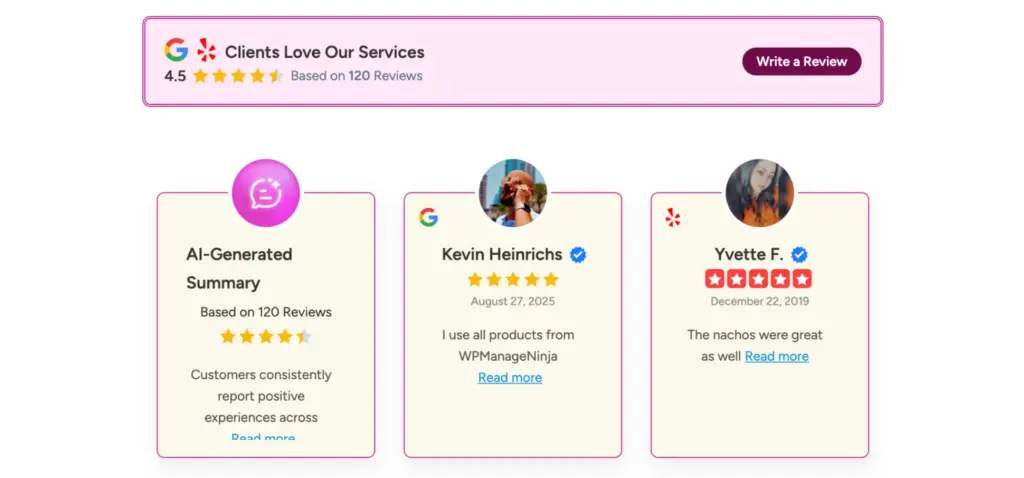
Showing your Google reviews on your website helps homeowners trust you the moment they land on the page. That is when they decide whether to book or keep searching. Reviews can increase conversions by up to 380 percent for higher-priced services like a water heater install or a sewer line repair.
Most plumbing sites get the idea of Google reviews management wrong. Reviews on the platform build trust on Google. Reviews on your website show your reputation to the visitors. That is where the booking decision actually happens.
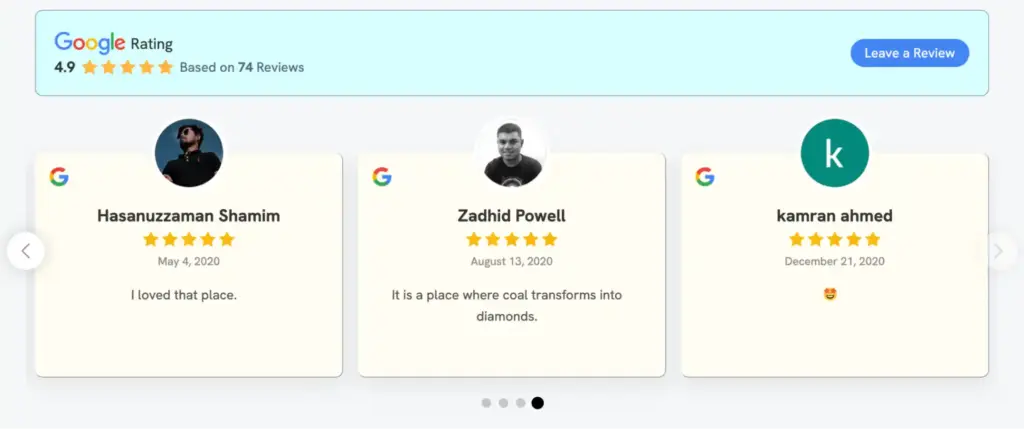
Here is where to put reviews on your website:
- A 5-star Google reviews badge with your average rating in the hero section of your homepage
- A dedicated page with 15 to 20 reviews, along with a ‘Write a Review’ button for new customers
- An embedded review feed on every service page (the drain cleaning page shows drain cleaning reviews)
- Schema markup so star ratings appear in your Google search snippet
A homeowner who lands on your site after seeing your Google Ad should see proof you are real, you are local, and you are trusted. Right there. Besides, reviews also improve your site’s SEO and make your site appear before the right audience.
Bonus Tips: Learn how to get more Google customer reviews to grow your reputation and attract new customers for your plumbing service.
5. Ask every customer for a review and make it easy
The fastest way to grow your positive reviews is to ask every customer for a review. In fact, 83% percent of clients leave a review when asked. It will help you rank in the local map pack and stay ahead of competitors with only a handful of old reviews.
The trick is to ask at the right moment, on the right channel, with one simple link.
Here is the system that works:
- Send the review request 30 minutes after the job is done
- Send it by SMS, not email. Texts get opened. Emails do not
- Include one direct link to your Google review page. One tap. Done
- Leave a printed review card with a QR code on the kitchen counter before the technician walks out
- Add the same QR code to every invoice and the back of every truck
Track reviews at the technician level.
Tie each review to the plumber who did the job. Now your team is part of the system, not just on the receiving end of it. Run a simple monthly leaderboard. The tech with the most 5-star reviews gets a small bonus or a free lunch. The one with a 3-star review knows why before the next shift starts.
If you collect reviews on Google, Yelp, and Facebook, aggregate them all into your website, so you are not logging into three platforms to check every morning. That alone saves a few hours a week.
6. Start a referral program your customers will actually use
A referral program turns your happy customers into a steady source of new jobs without any ad spend. It also brings in higher-quality leads, because people trust a friend’s recommendation more than any ad they see on Google. For most plumbers, referrals are the cheapest and warmest leads they will ever get.
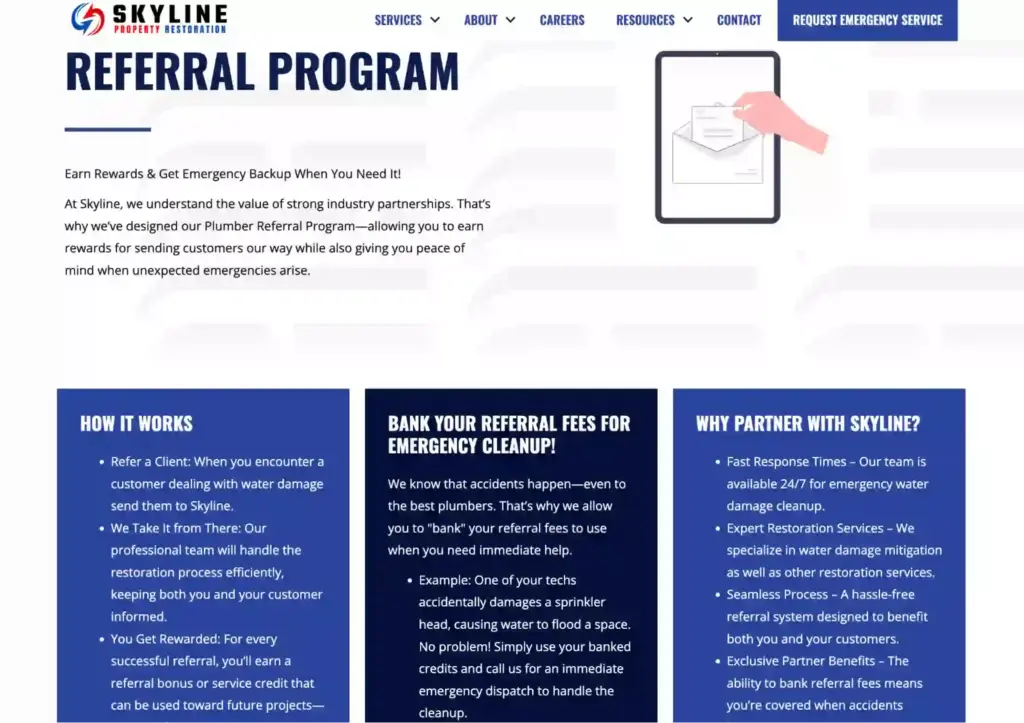
The catch is that most referral programs do not work because they are vague, hard to use, or asked at the wrong time.
A good referral program needs three things:
- A clear reward. “Get a 25 dollar Visa gift card when your friend books a job” works far better than “Refer a friend for a discount.”
- An easy way to refer. Use a short referral link or a simple form on your website where the customer drops in a name and phone number. Two fields, no logins.
- A timely ask. Ask within a week of finishing a job. Satisfaction is highest when the work is fresh in their mind.
Where to promote the offer:
- On the post-job thank-you text
- On the printed invoice
- On the back of every truck
- In the email signature of every team member
- In your monthly customer newsletter (if you send one)
Referrals come from great service, not from referral programs. The plumber who brings the trash bin in on the way out gets referred. The one who hands out flyers does not. A referral program just makes the recommendation easier. The service has to come first.
7. Sell a monthly maintenance plan to your existing customers
A monthly maintenance plan is one of the most overlooked plumbing business marketing moves. It gives you a steady income every month, even in slow seasons. It also keeps your customers from calling someone else the next time something breaks.
A simple plan can look like this:
- 19 dollars a month
- One annual inspection
- One drain cleaning per year
- Priority service when something goes wrong
- 10 percent member discount on repairs
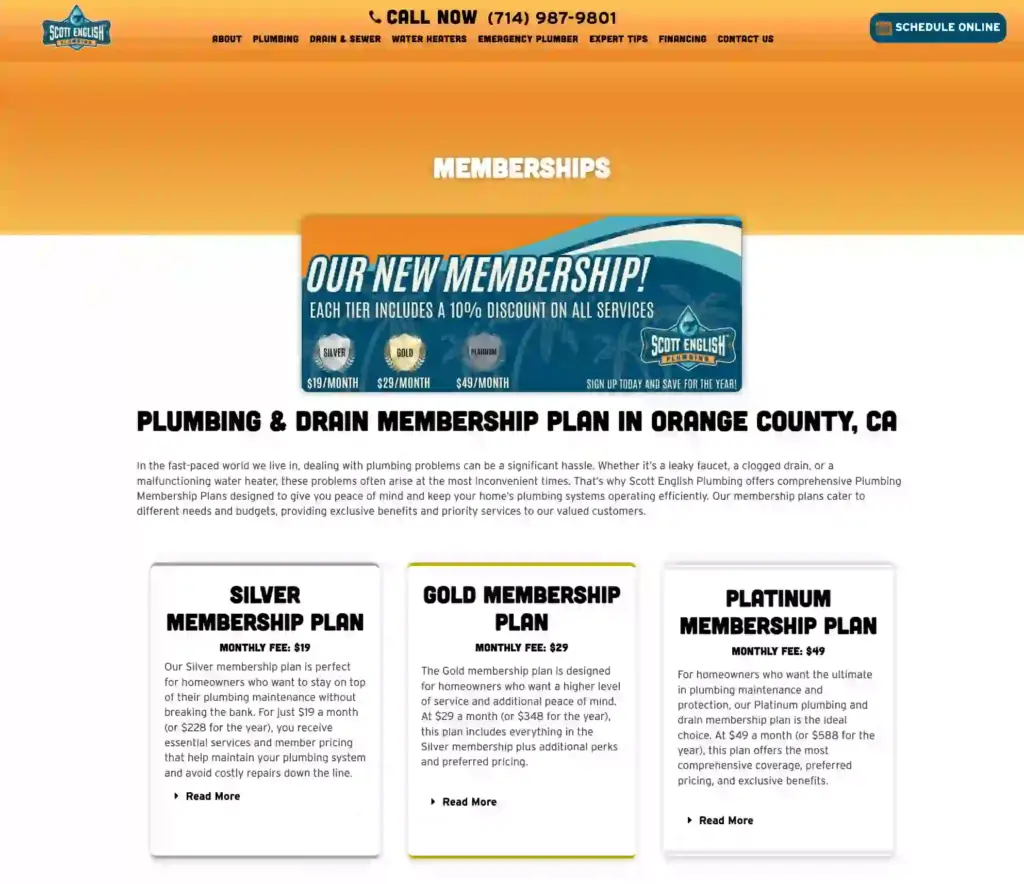
A customer who used to call you once for a 300 dollar job now pays 228 dollars a year, every year. This is a steady growth that impacts your profit over time.
How to make it work:
- Discuss the plan at the end of every job, while the customer is happy and the problem is fresh in their mind
- Don’t pitch it three weeks later in a cold email. By then, the moment is gone.
- Send seasonal reminders by email or SMS, like frozen pipe checks before winter, or a water heater check-up before summer.
- Send a renewal reminder after the first year. Members who hear from you a few times a year tend to stay with you for a long time.
This one strategy can turn an up-and-down income line into a steady one. And that’s what most plumbers say they want at the start of the year and forget to build by April.
8. Post short video content to build trust before the call
Short videos help homeowners get to know you before they ever pick up the phone. They see your face, your team, and the kind of work you do. By the time they call, they already feel like they know who is showing up.
Most homeowners check your YouTube and Facebook before they book. If they see videos from 2019 and a Facebook page that last posted in 2022, they move on to the next plumber.
You don’t need fancy gear. A phone is enough. 60 to 90 seconds is enough.
Here is what works well for plumbers:
- Quick answers to common questions, like “Why is my water heater making that knocking sound?”
- Before and after clips from real jobs (you are already taking those photos for your Google Business Profile)
- Short technician introductions so customers know who is coming to their door
- Simple DIY tips for problems they can fix on their own. It saves them a call today, but earns their trust for the next one
Post the same video on YouTube, Facebook, Instagram Reels, and TikTok. One video, four platforms.
Then turn each video into a short blog post on your website. You already have the script. Clean it up, add a few photos, and you have a new page that helps you rank on Google, too.
9. Be the helpful plumber in local Facebook and Nextdoor groups
Helping people in local online groups builds trust long before they ever need a plumber. So when their pipe bursts at midnight, your name is the first one that comes to mind.
Most plumbers ignore these groups. The ones who show up regularly become the go-to name in their town.
Here is how to show up the right way:
- Claim your Nextdoor business page. It’s free, and most of your competitors have not bothered
- Join 3 to 5 Facebook groups for the towns you serve
- When someone posts a plumbing question, answer it in plain language
- Use your business profile name, not your personal account
- Do not pitch. Do not drop your website link. Just be helpful
You can also sponsor a Little League team or a local 5K once a year. It costs a little. But seeing your business name on the back of every kid’s jersey builds the kind of trust that ads cannot buy.
10. Build referral partnerships with real estate agents, property managers, and home inspectors
Building relationships with local pros gives you a steady flow of plumbing jobs that do not depend on Google or ads. One good partner can send you more work in a year than a full ad budget.
Just look at the numbers:
- A property manager handling 200 rental units sends out 30 to 50 plumbing calls a year
- A busy real estate agent recommends a plumber to nearly every buyer they close with
- A home inspector who finds a problem will be asked, “Who should I call?” by every client
Most plumbers never tap into this. The ones who do end up with steady monthly work that does not rely on ad spend.
Three groups of local pros worth building relationships with:
- Property managers, who care about fast response times and steady pricing
- Real estate agents who want a plumber for quick pre-listing fixes
- Home inspectors, who just want a plumber who calls their clients back
Start with one coffee meeting a week. Lead with what you can do for them, not the other way around. Keep the relationship warm with a holiday card, a box of donuts at the office once a quarter, or a small finder’s fee for every job they send your way (10 to 15 percent of the first invoice is normal).

Get exclusive social media marketing tips and tutorials in your inbox!
Grow your business with the right moves
Marketing a plumbing business is not about doing everything. It is about doing a few things really well. The 10 plumbing marketing strategies above are the ones most growing plumbers rely on. Pick two or three that fit your business right now. Run them for 90 days. Only then move on to the next set.
Most plumbers fail at marketing because they try everything at once and finish nothing. The ones who grow are the ones who pick a few moves and stick with them. Your phone will eventually ring more often. You just have to start. All the best.
FAQs
How much should a plumbing business spend on marketing?
Most plumbers spend 8 to 12 percent of their yearly revenue if they are steady, and 15 to 20 percent if they are growing fast.
How long does it take for plumbing SEO to start working?
Usually, 3 to 6 months for real results, and 9 to 12 months to take over your local market. Google Business Profile updates can show in days.
Do plumbers need a website if they already have a Google Business Profile?
Yes. A Google Business Profile helps people find you, but a website is what makes them call.
What is the cheapest plumbing marketing strategy that actually works?
A fully set up Google Business Profile and steady review collection. Both are free, and together they often beat paid ads.
Are paid lead services like Angi worth it for plumbers?
Sometimes. You pay per lead and share each one with 3 or 4 other plumbers. Most plumbers do better with Google Local Services Ads.
What is the easiest way to show Google reviews on a WordPress plumbing website?
Use a plugin like WP Social Ninja. It connects to your Google Business Profile and pulls your reviews onto your website automatically.
How can plumbers handle after-hours leads without missing calls?
Add a chat widget like WhatsApp or Messenger to your website using WP Social Ninja, and manage your online booking through FluentBooking.
What is the best way to send maintenance plan reminders and follow-up emails?
Use an email automation tool. FluentCRM works inside WordPress, so you can send seasonal reminders and renewal nudges without a separate service.

Subscribe To Get
Weekly Email Newsletter
Connect, Customize, and Display Social Feeds, Reviews, and Chat widgets


Trending Posts
-

-
 Mashfik Upal Aumy
 -
 Mashfik Upal Aumy





Leave a Reply